
Explore the PS3 games that truly pushed Sony’s hardware to its limits, from advanced lighting and physics to timeless art direction. A deep dive for tech enthusiasts and nostalgia-driven gamers.
The PlayStation 3, released in 2006, stands as one of the most ambitious—and divisive—consoles in gaming history. Sony’s bold hardware decisions made it notoriously difficult to develop for, yet that same complexity enabled some of the most technically impressive games of its generation. Over time, developers learned how to tame the system, producing titles that rivaled—and sometimes surpassed—what seemed possible on seventh-generation consoles.
Even today, the PS3’s library remains remarkable. Beyond its iconic exclusives and genre-defining franchises, many games continue to impress visually thanks to advanced lighting techniques, dense environments, and clever use of limited memory. Whether you’re revisiting the console for nostalgia or discovering it for the first time, there’s a subset of PS3 games that still stand out as technical achievements—titles that squeezed every last drop of performance out of Sony’s hardware.
This list focuses on those games. Some pushed the console through raw technical ambition: complex shaders, heavy particle effects, and aggressive SPU usage. Others relied on exceptional art direction to mask hardware limitations and deliver visuals that age gracefully. Together, they represent the PS3 at its absolute best—when developers fully understood the machine and bent it to their will.
Best Graphics on Nintendo Switch 2: Games That Push the Hardware to Its Limits
The Power Behind the Pixels: Inside the PS3’s Hardware
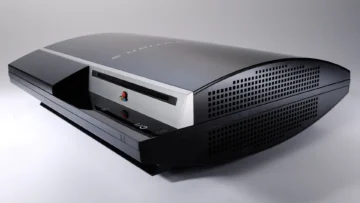
Sony’s PlayStation 3 was less a traditional console and more a bold experiment in high-performance computing. At its heart was the Cell Broadband Engine, co-developed by Sony, IBM, and Toshiba—a processor designed around parallel workloads rather than conventional game logic. While this architecture proved challenging early on, studios that mastered it unlocked impressive gains in physics simulation, animation, and rendering efficiency.
The Cell processor combined a single Power Processing Element (PPE) with seven active Synergistic Processing Elements (SPUs), all clocked at 3.2 GHz. These SPUs were crucial: developers could offload demanding tasks such as particle effects, physics calculations, audio processing, animation blending, and even parts of the rendering pipeline. When used correctly, they allowed games to punch well above what the PS3’s raw specs might suggest.
On the graphics side, the PS3 relied on the RSX Reality Synthesizer, an NVIDIA-designed GPU based on the G70 architecture. While less flexible than modern GPUs, it supported advanced techniques for its time, including deferred lighting, HDR rendering, motion blur, and post-process anti-aliasing such as MLAA. The biggest constraint came from the console’s split memory design—256 MB of XDR system RAM and 256 MB of GDDR3 video RAM—which forced developers to be extremely efficient with asset streaming and texture budgets.
Later hardware revisions refined the experience. The PS3 Slim (2009) improved thermals and reduced power consumption, while the Super Slim (2012) focused on cost reduction. Regardless of model, the underlying architecture remained the same, and by the end of the generation, developers had learned exactly how to exploit it.
| Component | Specification |
|---|---|
| CPU | Cell Broadband Engine @ 3.2 GHz (1 PPE + 7 SPUs) |
| GPU | RSX Reality Synthesizer @ 550 MHz |
| System RAM | 256 MB XDR DRAM |
| Video RAM | 256 MB GDDR3 SDRAM |
| Storage | 20–500 GB HDD (model-dependent; Super Slim also offered 12–16 GB eMMC) |
| Optical Drive | Blu-ray Disc (up to 50 GB dual-layer) |
| Video Output | Up to 1080p via HDMI |
| Power Draw | ~250–380 W (original); ~190–200 W (Slim) |
Top PS3 Games with Jaw-Dropping Graphics: Pushing Hardware to the Edge
As the industry transitioned to high-definition gaming, the PS3 became a proving ground for ambitious developers willing to wrestle with its unconventional design. The games highlighted in this section represent the pinnacle of that effort—titles that leveraged the Cell processor’s SPUs, stretched the RSX GPU to its limits, or used artistic brilliance to overcome technical constraints.
Some of these games focused on realism, delivering detailed character models, complex lighting systems, and cinematic presentation. Others embraced stylization, proving that strong art direction can be just as impactful as raw polygon counts. What unites them is a clear understanding of the PS3’s strengths—and a willingness to push past its limitations.
Grand Theft Auto V

- Release Year: 2013
- Developer: Rockstar North
- Genre: Open-World Action-Adventure
Grand Theft Auto V represents one of the most astonishing late-generation technical feats on the PlayStation 3. Built on Rockstar’s proprietary RAGE engine, the game delivers a vast, fully realized open world in the form of Los Santos and its surrounding countryside—complete with dynamic weather, dense traffic systems, and a seamless switch between three playable protagonists. Running at native 720p with a 30fps target, the sheer scale of the simulation is what truly stands out.
Rockstar leaned heavily on the Cell processor’s SPUs to stream geometry, textures, and AI logic in real time, minimizing pop-in despite the PS3’s strict 256MB memory limits. Explosions, fire, water effects, and volumetric fog are handled with surprising finesse, giving the world a sense of cohesion and physical presence. As Digital Foundry noted at the time, GTA V wasn’t just impressive for its size—it was remarkable for how stable and visually rich it remained under constant systemic load, making it a definitive showcase of what the PS3 could achieve at the end of its lifecycle.
Uncharted 2: Among Thieves
- Release Year: 2009
- Developer: Naughty Dog
- Genre: Action-Adventure
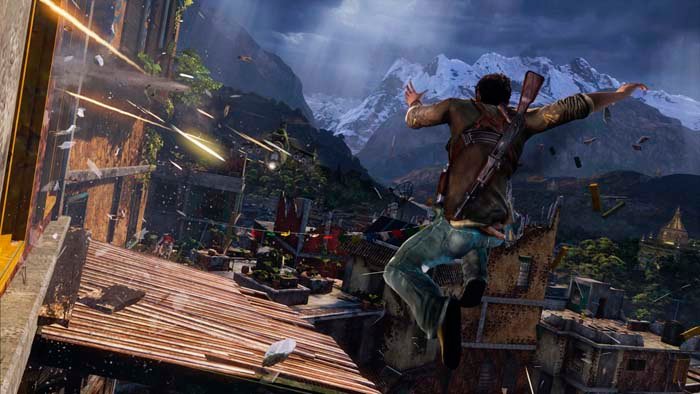
With Uncharted 2, Naughty Dog delivered one of the PS3’s earliest true “next-gen” moments. Nathan Drake’s globe-trotting adventure blended blockbuster set pieces—crumbling temples, Himalayan villages, and the now-iconic moving train sequence—with cutting-edge visuals that set a new benchmark in 2009. The game ran at 720p and a largely stable 30fps, with image quality that far exceeded contemporaries.
The studio’s proprietary engine made exemplary use of the Cell architecture, offloading post-processing effects such as motion blur, depth of field, and texture filtering to the SPUs. Advanced animation blending gave characters an unprecedented sense of weight and realism, while dynamic lighting and particle systems brought environments to life. Snowstorms, fire, and debris weren’t just visual flourishes—they were integral to the cinematic presentation, cementing Uncharted 2 as a generational leap for PS3 graphics.
Batman: Arkham City
- Release Year: 2011
- Developer: Rocksteady Studios
- Genre: Action-Adventure
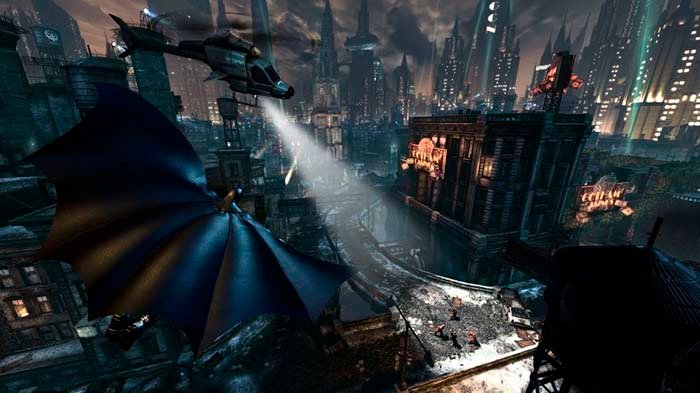
Batman: Arkham City expanded Rocksteady’s vision from the confined corridors of Arkham Asylum into a sprawling open environment—a bold move on PS3 hardware. Powered by a heavily modified Unreal Engine 3, the game rendered Gotham’s prison city at 720p with v-sync enabled for most of the experience, though demanding outdoor areas could still push the system to its limits.
Visually, the game leaned on strong art direction and atmospheric effects. Dynamic rain slicked rooftops and capes, volumetric fog filled the streets, and ambient occlusion added depth to Gotham’s gothic architecture. Character models were richly detailed, with expressive facial animations and cloth physics enhancing Batman’s iconic silhouette. Despite occasional performance dips, Arkham City remains a standout example of how Unreal Engine 3 could be pushed on PS3 with careful optimization and smart visual prioritization.
The Last of Us

- Release Year: 2013
- Developer: Naughty Dog
- Genre: Action-Adventure / Survival Horror
Few games pushed the PlayStation 3 as hard—or as elegantly—as The Last of Us. Released eight years into the console’s lifespan, Naughty Dog’s post-apocalyptic epic stretched aging hardware to its absolute limit. Running at 720p with a 30fps target (often fluctuating between 20–30fps in dense scenes), the game relied heavily on the Cell’s SPUs to manage occlusion culling, asset streaming, physics, and animation workloads.
The visual result was extraordinary. Overgrown urban environments were rendered with a mix of pre-baked and real-time lighting, producing convincing global illumination, soft shadows, and volumetric “god rays.” Alpha effects—dust, spores, fog, and foliage—added depth and atmosphere, while high-detail character models featured layered hair, detailed skin shaders, and subtle facial animations. Digital Foundry famously described it as a technical masterpiece, noting how low-level optimizations and even hand-written assembly code helped overcome the PS3’s split memory architecture to deliver visuals that rivaled early eighth-generation titles.
BioShock Infinite

- Release Year: 2013
- Developer: Irrational Games
- Genre: First-Person Shooter
Set high above the clouds, BioShock Infinite showcased a very different kind of visual ambition on PS3. Running at 720p on a customized version of Unreal Engine 3, the game impressed not through sheer realism, but through scale, color, and complexity. The floating city of Columbia featured expansive skyboxes, dense crowds with individual animations, and dramatic lighting that gave the world a painterly quality.
Despite memory constraints, the PS3 version often delivered more consistent performance during heavy combat scenarios than expected, thanks to optimized particle effects and lighting workloads. Dynamic weather, large-scale destruction, and Elizabeth’s reality-bending “tears” added layers of visual spectacle. The result was a technically demanding game that balanced artistry and engineering to create one of the most distinctive visual experiences of the generation.
Metal Gear Solid 4: Guns of the Patriots
- Release Year: 2008
- Developer: Kojima Productions
- Genre: Stealth Action
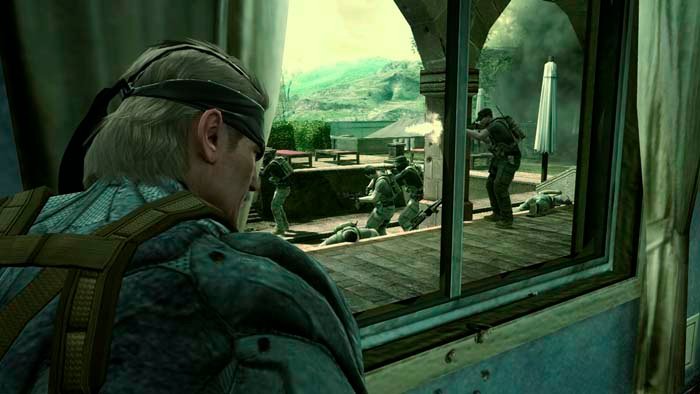
As one of the earliest PS3 exclusives built specifically for the hardware, Metal Gear Solid 4 was a bold statement of intent. Kojima Productions’ proprietary engine rendered scenes at 1024×768, upscaled to 720p or 1080p, delivering sharp image quality for its time. More importantly, it showcased dynamic battlefields where multiple AI-controlled factions fought independently, creating emergent chaos rarely seen in 2008.
The game featured highly detailed character models, adaptive camouflage that reacted to surfaces, and dense particle effects for smoke, fire, and explosions. Seamless transitions between gameplay and cutscenes—often indistinguishable from one another—helped sell its cinematic ambitions. While later titles would surpass it technically, MGS4 remains one of the first games to truly demonstrate the PS3’s potential for complex, high-fidelity scenes.
Mass Effect 3
- Release Year: 2012
- Developer: BioWare
- Genre: Action RPG / Third-Person Shooter
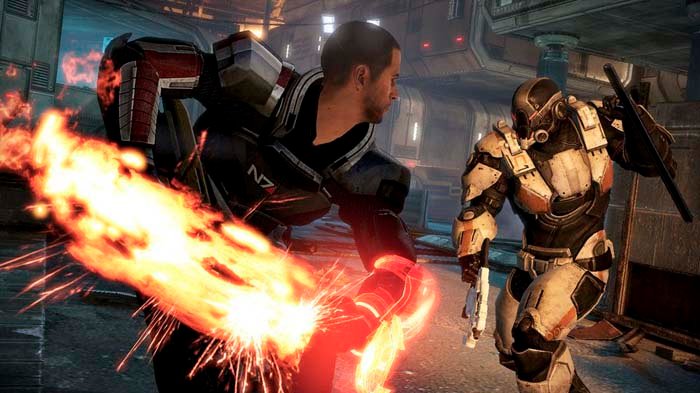
Mass Effect 3 brought BioWare’s space opera trilogy to a visually refined conclusion on PS3. Built on an evolved Unreal Engine 3, the game targeted 720p and 30fps, with noticeably improved level streaming and reduced pop-in compared to earlier entries in the series.
Enhanced lighting models, improved specular highlights, and denser particle effects gave biotic powers and large-scale battles greater impact. Animation and effects workloads were better distributed, allowing for more chaotic combat encounters without sacrificing visual clarity. While not the most technically aggressive title on the platform, Mass Effect 3 demonstrated how iterative engine improvements could significantly elevate visual quality on fixed hardware.
Persona 5

- Release Year: 2016
- Developer: Atlus (P-Studio)
- Genre: JRPG
Rather than chasing realism, Persona 5 proved that striking art direction could rival raw technical muscle. Running at native 720p and 30fps on PS3, the game shared nearly identical assets with its PS4 counterpart, with only minor compromises such as lower-resolution shadows and subtle edge blur.
Its bold, cel-shaded aesthetic, dynamic camera work, and kinetic UI animations masked hardware limitations brilliantly. Menus exploded onto the screen with comic-book flair, transitions were fluid, and character animations remained consistently sharp. As one of the last major PS3 releases, Persona 5 stands as a masterclass in visual style over brute-force rendering.
God of War III
- Release Year: 2010
- Developer: Santa Monica Studio
- Genre: Action / Hack-and-Slash
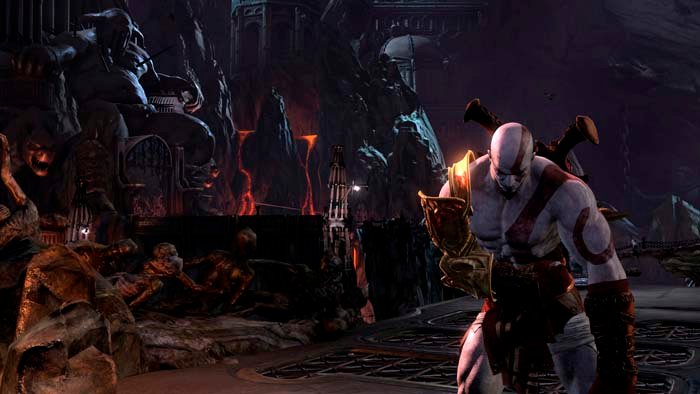
God of War III remains one of the most visually spectacular games ever released on the PlayStation 3. Targeting 720p and 30fps, Santa Monica Studio employed Morphological Anti-Aliasing (MLAA) to achieve exceptionally clean edges—a rare and effective solution at the time.
Massive boss encounters against titans unfolded seamlessly, with enormous character models, dense geometry, and heavy particle effects for magic, blood, and destruction. High-resolution textures streamed in without obvious pop-in, and lighting was both dramatic and technically refined. Digital Foundry praised the game as a benchmark for visual spectacle, proving that scale and polish could coexist on limited hardware.
Uncharted 3: Drake’s Deception
- Release Year: 2011
- Developer: Naughty Dog
- Genre: Action-Adventure
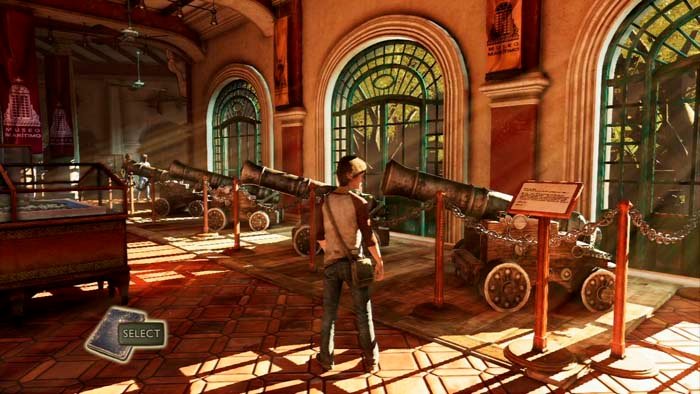
Building on the foundation laid by Uncharted 2, Uncharted 3 pushed Naughty Dog’s engine further with more complex environments and visual effects. Desert vistas featured tessellated terrain and blowing sand that interacted with characters and cloth, while set pieces like sinking ships showcased advanced water simulation and lighting.
Running at 720p with improved stability, the game refined shadow quality, anti-aliasing, and post-processing effects such as motion blur and depth of field. Heavy SPU usage allowed for destructible environments and large-scale scenes without overwhelming the system. Even today, Uncharted 3 remains a striking example of late-generation PS3 optimization and cinematic ambition.
Journey

- Release Year: 2012
- Developer: thatgamecompany
- Genre: Adventure / Art Game
Journey is often cited as proof that graphical impact isn’t measured in polygons alone. Thatgamecompany’s wordless odyssey across vast deserts and ancient ruins delivers one of the most emotionally resonant visual experiences on PS3 through pure artistic restraint. Running at 720p with a locked 30fps that rarely falters, the game prioritizes fluid animation, soft lighting, and reactive environments over raw geometric complexity.
The proprietary engine focuses heavily on cloth physics—most notably the protagonist’s flowing scarf—and dynamic sand particles that deform and swirl in response to movement. Subtle volumetric lighting, bloom, and god rays shift naturally with the time of day, creating a dreamlike atmosphere that feels alive despite minimalist assets. By embracing abstraction and color over density, Journey sidesteps the PS3’s hardware limits entirely, delivering visuals that remain timeless more than a decade later.
Wipeout HD
- Release Year: 2008
- Developer: Studio Liverpool
- Genre: Arcade Racing
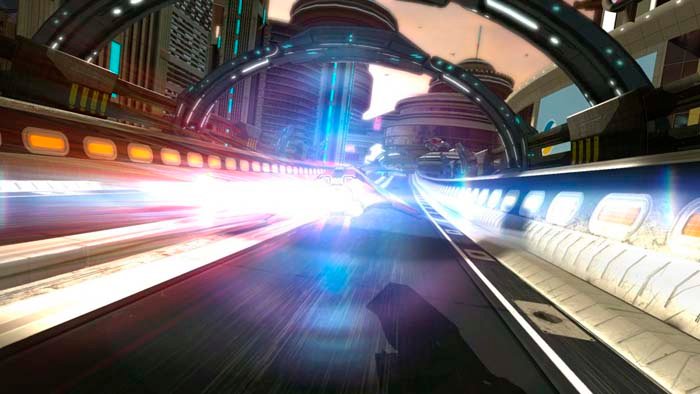
Wipeout HD stands as one of the PlayStation 3’s earliest and most striking technical showcases—a proof of concept for Sony’s long-promised “1080p dream.” Rebuilt from PSP-era assets but fundamentally re-engineered for PS3, Studio Liverpool delivered blisteringly fast anti-gravity racing at a full 1080p output while maintaining a rock-solid 60fps lock, an achievement few contemporaries could rival.
The engine employed an early form of dynamic resolution scaling and aggressive optimization to prioritize fluidity above all else. Neon-lit tracks, razor-sharp geometry, and dense particle trails conveyed a powerful sense of speed, while explosions and collisions retained clarity even at extreme velocities. Digital Foundry frequently cited Wipeout HD as a benchmark for image quality and performance, demonstrating how smart technical compromises could yield results that still look remarkably clean and responsive over a decade later.
Dead Space 2
- Release Year: 2011
- Developer: Visceral Games
- Genre: Survival Horror / Third-Person Shooter
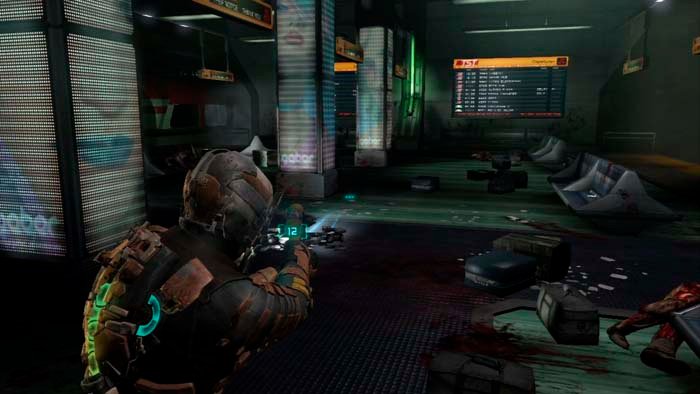
Dead Space 2 refined the oppressive atmosphere of its predecessor while delivering a technically robust presentation on PS3. Running at native 720p, Visceral Games’ engine relied on fully deferred rendering to manage hundreds of dynamic light sources simultaneously—casting long, harsh shadows and volumetric god rays that intensified the claustrophobic horror of the Sprawl space station.
While the absence of traditional anti-aliasing resulted in visible jaggies, the game’s muted color palette, heavy contrast, and intricate lighting design effectively masked edge artifacts. Performance closely mirrored the Xbox 360 version, holding near-constant 30fps with only minor drops in extreme combat scenarios. Digital Foundry noted the PS3 version’s strong parity and immersive audio design, making Dead Space 2 a standout example of how lighting-driven rendering could define visual identity on constrained hardware.
Resistance 3
- Release Year: 2011
- Developer: Insomniac Games
- Genre: First-Person Shooter
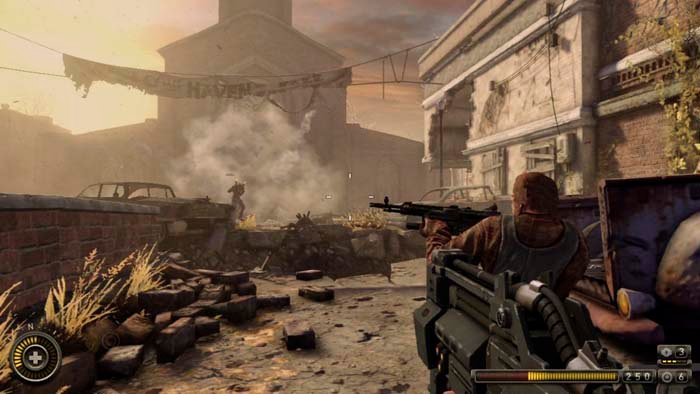
Resistance 3 marked Insomniac Games’ most visually ambitious entry in the franchise, embracing large-scale chaos over raw image clarity. Rendered at sub-720p resolution with an unlocked frame rate targeting 30fps, the engine prioritized dense particle effects, destructible environments, and overwhelming enemy counts during prolonged firefights.
Volumetric fog, dynamic lighting, and screen-filling smoke effects contributed heavily to the game’s oppressive atmosphere, particularly in outdoor set pieces and co-op survival modes. Heavy workloads were offloaded to maintain playable pacing even as the screen filled with Chimera hordes, fire, and debris. While technically messy at times, Resistance 3 delivered sheer spectacle and scale, standing as a late-generation showcase of Insomniac’s willingness to push the PS3 beyond conservative limits.
Zone of the Enders HD Collection
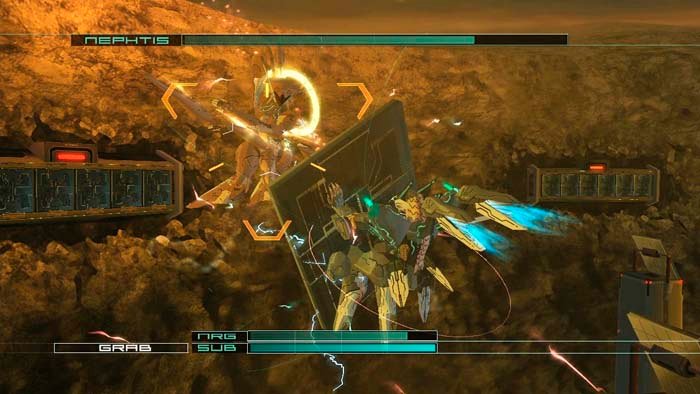
- Release Year: 2012
- Developer: High Voltage Software (patched by HexaDrive)
- Genre: Action / Mecha Shooter
The Zone of the Enders HD Collection ultimately evolved into one of PS3’s most impressive remaster success stories—thanks largely to HexaDrive’s post-launch patch. Following a troubled release, the updated version rendered 3D elements internally at 1280×1080, delivering crisp 1080p output while leveraging the Cell processor’s SPUs for performance gains approaching a tenfold improvement, enabling near-constant 60fps gameplay with v-sync enabled.
Visual upgrades included FXAA for global edge smoothing, 32x MSAA applied selectively to wireframe mechs, restored depth-of-field with bokeh effects, and corrected texture filtering and alpha blending faithful to the original PS2 releases. Digital Foundry praised the transformation, highlighting how laser effects, particle-heavy explosions, and high-speed aerial combat finally achieved the fluidity and clarity the games always deserved—turning a flawed remaster into a genuine technical showcase.
ICO & Shadow of the Colossus Collection
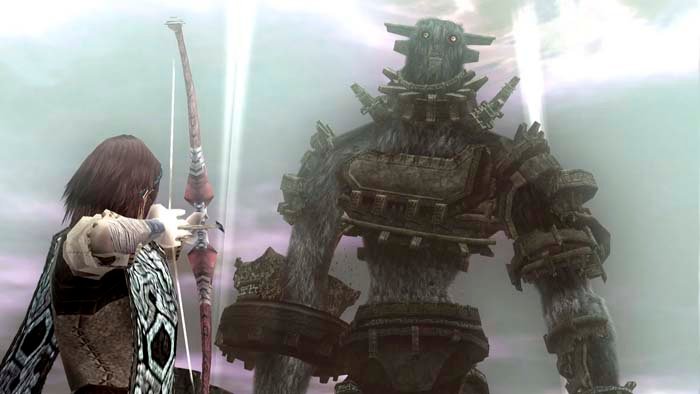
- Release Year: 2011
- Developer: Bluepoint Games (remaster) / Team Ico (originals)
- Genre: Action-Adventure / Puzzle-Platformer
Bluepoint Games’ HD collection brought ICO and Shadow of the Colossus to PS3 with the technical polish they always deserved. Both titles were upscaled to 720p with improved anti-aliasing and significantly smoother performance, with Shadow of the Colossus in particular shedding much of the infamous slowdown that plagued the PS2 original.
While asset detail remained faithful to Fumito Ueda’s minimalist vision, cleaner textures, improved lighting, and widescreen presentation enhanced the sense of scale and isolation. Vast plains, ancient ruins, and towering colossi felt more imposing than ever. The remaster demonstrated how resolution and frame-rate stability alone could elevate already-iconic art direction into something truly timeless.
Rayman Legends
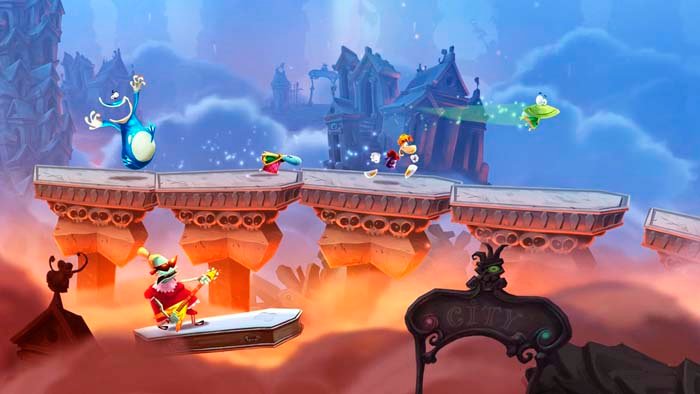
- Release Year: 2013
- Developer: Ubisoft Montpellier
- Genre: Platformer
Rayman Legends is a technical showcase disguised as a cartoon. Powered by Ubisoft’s UbiArt Framework, the game renders hand-drawn 2D artwork at native 1080p on PS3, maintaining a flawless 60fps throughout—even during hectic co-op chaos and particle-heavy sequences.
The vector-based engine enables deep parallax scrolling, dynamic lighting on characters, and richly animated backgrounds without any performance compromise. Every frame feels meticulously crafted, with expressive animations and vibrant color palettes that burst off the screen. In a generation obsessed with realism, Rayman Legends proved that precision, clarity, and artistic confidence could be just as graphically impressive.
Killzone 2
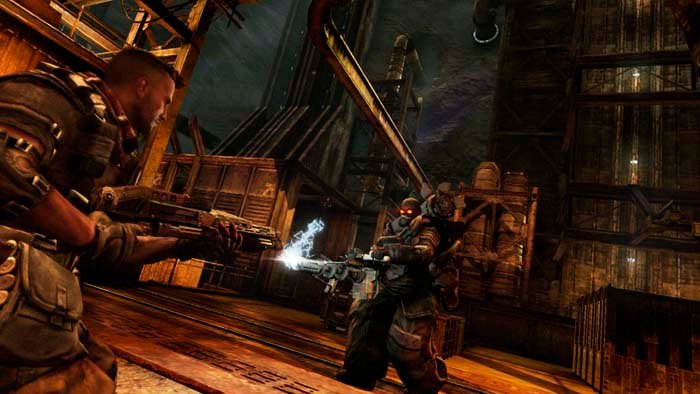
- Release Year: 2009
- Developer: Guerrilla Games
- Genre: First-Person Shooter
Killzone 2 marked a turning point for console shooters and remains one of the most aggressive technical showcases on PS3. Guerrilla Games pioneered deferred rendering on consoles with a custom engine capable of complex lighting scenarios, using a large G-buffer to enable dynamic shadows, volumetric fog, and dense particle effects—all rendered at 720p with v-sync engaged.

The game’s use of 4x MSAA was especially notable for the era, delivering clean edges despite the heavy post-processing load. Offloading effects to the Cell’s SPUs allowed for destructible environments, screen-filling explosions, and thick atmospheric haze without collapsing performance. Digital Foundry praised its bold visual identity, describing Killzone 2 as less about photorealism and more about raw, industrial intensity—and it succeeded spectacularly.
Okami HD

- Release Year: 2012
- Developer: Capcom / HexaDrive (remaster)
- Genre: Action-Adventure
Ōkami HD is one of the cleanest and sharpest-looking titles on the PlayStation 3. Rendered at full 1080p with 4x MSAA and 16x anisotropic filtering, the remaster enhances the original’s sumi-e ink art style with razor-sharp lines and richly saturated colors.
HexaDrive preserved the fluid brushstroke effects, particle blooms, and stylized animations while ensuring a locked 30fps. The result is a presentation that feels closer to interactive artwork than a traditional video game. It’s a prime example of how higher resolution and thoughtful remastering can elevate an already distinctive visual identity.
L.A. Noire

- Release Year: 2011
- Developer: Team Bondi / Rockstar Games
- Genre: Action-Adventure / Detective
L.A. Noire stands apart from nearly every other PS3 title thanks to its revolutionary MotionScan technology. Using 32-camera rigs to capture actors’ facial performances in full 3D, the game mapped subtle expressions—eye movements, micro-twitches, and lip tension—onto character models at 30fps, creating an unprecedented level of realism in dialogue scenes.
Rendered at 720p, the game combined these hyper-detailed faces with period-authentic environments, dynamic weather, and cloth simulation for suits and dresses. While the open world itself was relatively restrained, Digital Foundry highlighted how MotionScan pushed character believability far beyond traditional animation, making interrogation sequences uniquely immersive despite the platform’s memory constraints.
Metal Gear Solid HD Collection

- Release Year: 2011
- Developer: Bluepoint Games (remaster) / Kojima Productions (originals)
- Genre: Stealth Action
The Metal Gear Solid HD Collection modernized MGS2, MGS3, and Peace Walker with higher resolutions, improved textures, and smoother performance across the board. Key sections ran at a fluid 60fps, while output resolutions reached up to 720p—with some UI elements and cutscenes supporting 1080p output.
Bluepoint’s enhancements improved lighting, reduced aliasing, and extended draw distances, making jungles, industrial complexes, and urban environments feel cleaner and more readable. The collection highlighted just how visually ambitious Kojima’s games already were—and how well they scaled with modernized rendering on PS3 hardware.
Assassin’s Creed IV: Black Flag

- Release Year: 2013
- Developer: Ubisoft Montreal
- Genre: Open-World Action-Adventure
Assassin’s Creed IV: Black Flag delivered some of the most impressive water rendering of the entire PS3 generation. Running at 720p with a 30fps target, Ubisoft’s AnvilNext engine produced dynamic ocean waves, realistic water caustics, and reflections that responded convincingly to weather, wind, and ship movement.
Naval combat became the visual centerpiece, with volumetric clouds, cannon smoke, and particle-heavy explosions filling the screen during fleet engagements. On land, dense foliage and seamless island transitions reinforced the sense of scale. Digital Foundry praised the balance between ambition and stability, noting how Black Flag made the PS3 feel stretched—but never broken.
Call of Duty: Modern Warfare 3
- Release Year: 2011
- Developer: Infinity Ward / Sledgehammer Games
- Genre: First-Person Shooter
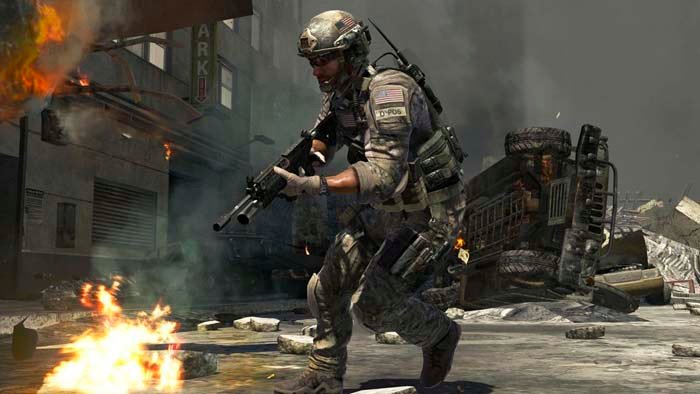
Modern Warfare 3 prioritized responsiveness above all else, targeting a rock-solid 60fps on PS3—even if that meant dropping below native 720p resolution via dynamic scaling. Powered by the refined IW engine, the game used MLAA to smooth edges and aggressive texture streaming to keep action fluid during intense firefights.
Explosions, smoke, debris, and scripted destruction filled the screen without major frame-rate drops, preserving the fast-paced feel essential to competitive multiplayer. While not a visual powerhouse in terms of resolution, MW3 exemplified smart performance-first optimization, proving that fluidity often matters more than pixel count.
Heavy Rain
- Release Year: 2010
- Developer: Quantic Dream
- Genre: Interactive Drama / Adventure
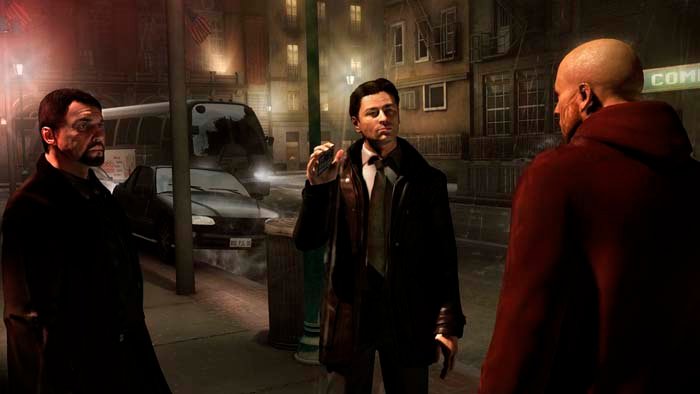
Heavy Rain positioned itself as a technical statement on PS3 by placing facial realism and emotional nuance at the center of its visual design. Quantic Dream’s proprietary engine rendered full-performance motion capture with unusually detailed facial models, featuring convincing subsurface scattering, wet eyes, and subtle micro-expressions—all presented at 720p with a stable 30fps target.
The game made extensive use of the Cell processor’s SPUs to drive persistent rain effects, real-time surface wetness on clothing and streets, and volumetric lighting that filtered through neon-lit downpours. Depth-of-field and motion blur reinforced the cinematic framing, while seamless scene transitions masked loading entirely. The result was a moody, film-like experience that prioritized character-driven realism over scale, and remains one of the PS3’s most distinctive visual achievements.
Tomb Raider
- Release Year: 2013
- Developer: Crystal Dynamics
- Genre: Action-Adventure
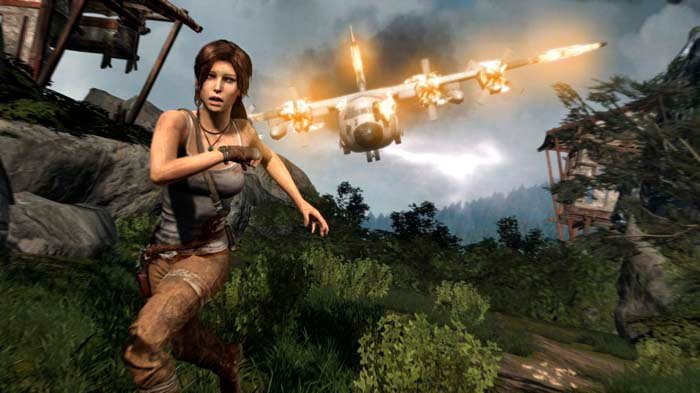
Crystal Dynamics’ reboot of Tomb Raider delivered one of the cleanest-looking multiplatform titles on PS3. Running at native 720p, the Crystal Engine produced high-fidelity textures with notably sharper image clarity than its Xbox 360 counterpart, particularly in foliage-heavy environments and distant geometry.
Volumetric lighting was a standout feature, with god rays piercing jungle canopies and dynamic shadows enhancing caves, storms, and night-time encounters. Console-adapted TressFX hair physics, combined with cloth simulation and dense particle debris, added realism to Lara Croft’s animation. Careful asset streaming minimized pop-in, making Tomb Raider a late-generation showcase for balanced visual ambition and stable performance.
Max Payne 3
- Release Year: 2012
- Developer: Rockstar Vancouver
- Genre: Third-Person Shooter
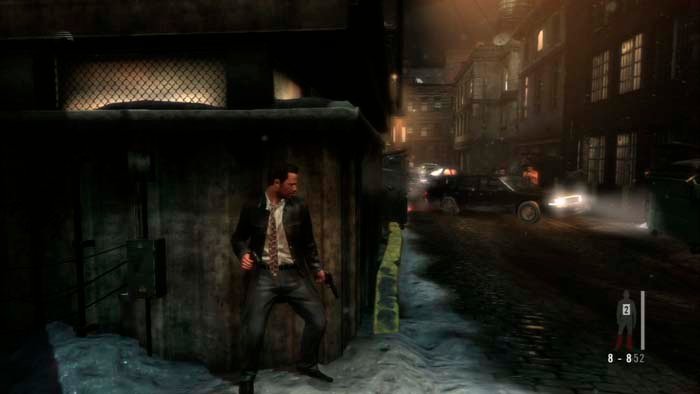
Max Payne 3 pushed the PS3 hard with its relentless emphasis on cinematic destruction. Rockstar’s RAGE engine delivered extreme particle density during bullet-time sequences, filling the screen with shards, dust, smoke, and blood—often numbering in the thousands—while dynamically scaling resolution to preserve frame-rate stability at a 720p target.
The game blended Euphoria physics with ragdoll animation for reactive enemy deaths, while heavy motion blur and depth-of-field heightened the disorientation of slow-motion dives. Digital Foundry highlighted extensive SPU usage for real-time destruction and texture streaming, resulting in visceral firefights that consistently stressed the hardware yet maintained a strong sense of visual cohesion.
MLB The Show 16

- Release Year: 2016
- Developer: Sony San Diego Studio
- Genre: Sports Simulation (Baseball)
As the final MLB The Show entry on PS3, the 2016 edition served as a technical swan song for the platform. The in-house engine refined its lighting system to account for realistic sun angles, accurate shadow projection, and smoother day-to-night transitions across stadiums—all while holding a stable 30fps at 720p.
Incremental upgrades improved crowd variety, field textures, and reflective materials on uniforms and equipment. While it lacked next-gen features like physically based rendering, the game demonstrated how disciplined optimization and smart lighting could continue extracting quality visuals from aging hardware.
Battlefield 3
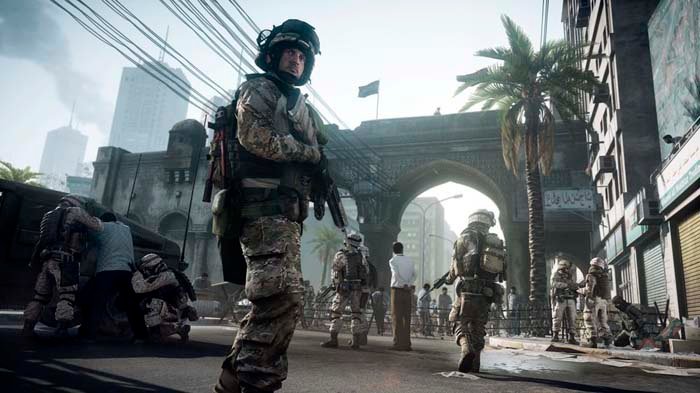
- Release Year: 2011
- Developer: DICE
- Genre: First-Person Shooter
Battlefield 3 brought Frostbite 2 to consoles, delivering a technically ambitious shooter that emphasized large-scale destruction and systemic chaos. Rendered at 720p, the engine supported dynamic building collapse, procedural debris, and advanced animation deformation for realistic environmental damage.
Volumetric smoke, dust clouds, lens flares, and depth-of-field effects contributed to intense battlefield immersion, though performance hovered around 30fps with dips during large multiplayer encounters. Despite the constraints, Frostbite’s deferred rendering and SPU-assisted particle systems enabled a level of spectacle rarely seen in console shooters at the time.
Ni no Kuni: Wrath of the White Witch

- Release Year: 2013
- Developer: Level-5 / Studio Ghibli
- Genre: JRPG
Ni no Kuni stands as one of the most visually charming games on PS3, thanks to its seamless collaboration with Studio Ghibli. Rendered at 720p, the custom engine blended cel-shaded characters with watercolor-inspired environments, creating the illusion of a fully playable animated film.
Fluid animation, expressive character designs, and carefully layered particle effects for spells and summons maintained a locked 30fps throughout. Rather than pushing technical limits, the game leaned into artistic cohesion, proving that consistency and visual identity could be just as impactful as raw graphical horsepower.
Killzone 3
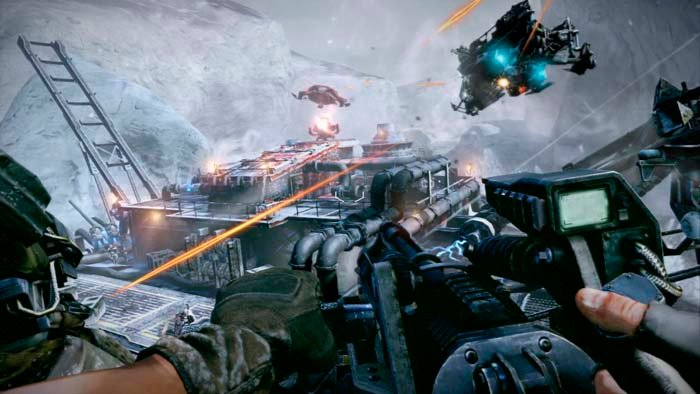
- Release Year: 2011
- Developer: Guerrilla Games
- Genre: First-Person Shooter
Killzone 3 refined the deferred rendering techniques introduced in its predecessor, delivering cleaner image quality and improved performance. Running at 720p with MLAA, the engine reduced jagged edges while offloading volumetric fog, smoke, and lighting calculations to the Cell’s SPUs.
Large-scale environments showcased alien landscapes with long draw distances, destructive set-pieces, and aggressive motion blur. Compared to Killzone 2, stability improved noticeably, allowing for more frequent spectacle without sacrificing frame pacing. It remains one of the most visually dense shooters on the platform.
Final Fantasy XIII

- Release Year: 2010
- Developer: Square Enix
- Genre: JRPG
Final Fantasy XIII emphasized visual spectacle through Square Enix’s Crystal Tools engine, delivering highly detailed character models, elaborate summon animations, and pristine pre-rendered cutscenes. Gameplay rendered at 720p with dynamic scaling, prioritizing visual clarity during combat-heavy sequences.
While the linear level design reduced open-world strain, it allowed the engine to focus resources on lighting, particle effects, and cinematic camera work. Summons in particular showcased dense geometry and complex shaders, cementing FFXIII as one of the most visually polished JRPGs of its generation.
inFAMOUS 2
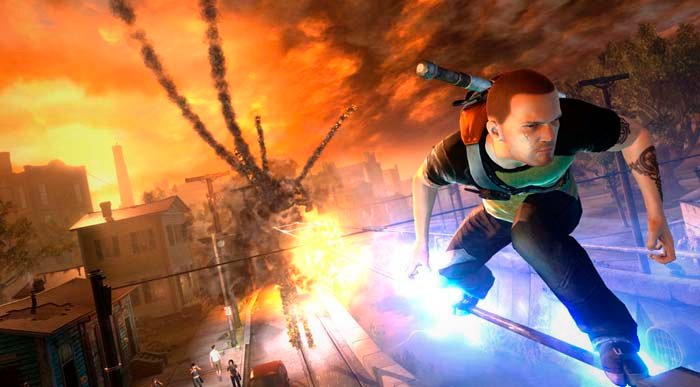
- Release Year: 2011
- Developer: Sucker Punch Productions
- Genre: Open-World Action-Adventure
inFAMOUS 2 refined the open-world framework of its predecessor, delivering denser urban environments and more expressive visual effects. Running at 720p, the engine handled procedural debris, destructible objects, and heavy particle effects for lightning, fire, and ice-based powers.
A comic-book-inspired art style—featuring bold outlines and color grading—helped mask technical limitations while enhancing visual readability. Combined with fluid traversal animations and dynamic weather, inFAMOUS 2 offered a vibrant, reactive sandbox that showcased smart optimization over brute-force rendering.
Gran Turismo 6

- Release Year: 2013
- Developer: Polyphony Digital
- Genre: Racing Simulation
Gran Turismo 6 stands as one of the most technically ambitious titles ever released on PS3. Utilizing the Cell’s SPUs for adaptive tessellation, the engine delivered smoother, more detailed premium car models with accurate curvature and reflections. The game rendered at up to 1440×1080 (upscaled to 1080p) while targeting 60fps—generally stable in 720p mode, with occasional dips in complex scenes.
Enhanced HDR lighting enabled realistic shadows, dynamic time-of-day transitions, and accurate night skies complete with mapped constellations. Real-time weather effects, reflective track surfaces, and detailed particle dust impressed Digital Foundry, making GT6 a fitting technical capstone to the PS3 era.
God of War: Ascension

- Release Year: 2013
- Developer: Santa Monica Studio
- Genre: Action / Hack-and-Slash
Serving as a prequel to Kratos’ saga, God of War: Ascension stands as one of the most visually ambitious titles ever released on PS3. Santa Monica Studio pushed the hardware hard with advanced volumetric lighting, particularly in dimly lit interiors and underwater sequences, paired with dynamic real-time shadows that firmly grounded characters in sun-drenched arenas and sprawling mythological set pieces.
Kratos’ character model benefited from improved skin shaders that reacted dynamically to light sources, lending boss encounters a near-CGI sheen. Heavy per-object and camera-based motion blur enhanced the sense of speed and brutality during extended combo chains, while MLAA delivered notably clean edges across high-density geometry. Targeting 720p at 30fps, Ascension often rode the performance line, but its blend of spectacle and technical sophistication made it one of the console’s closest brushes with early next-gen visual fidelity.
Puppeteer

- Release Year: 2013
- Developer: Japan Studio
- Genre: Platformer / Adventure
Puppeteer is a masterclass in how art direction and smart rendering choices can elevate a game beyond raw technical constraints. Built around a theatrical, stage-like presentation, Japan Studio’s engine rendered at 720p with MLAA, effectively smoothing high-frequency details like ornate set pieces, fabric textures, and sharply outlined character silhouettes, all while maintaining a locked 30fps with v-sync.
A fixed-cost lighting solution allowed for an unusually high number of dynamic light sources without performance penalties, producing smooth shadows and subtle specular highlights across richly textured environments. The result was a vibrant, storybook aesthetic that felt meticulously crafted, proving that late-generation PS3 hardware could still deliver visually polished, aliasing-free experiences through creative engineering.
Ratchet & Clank: Into the Nexus
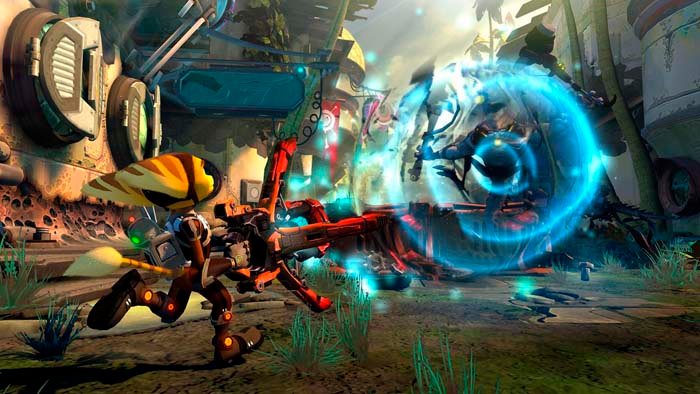
- Release Year: 2013
- Developer: Insomniac Games
- Genre: Platformer / Action-Adventure
Into the Nexus offered a more compact Ratchet & Clank adventure, but one that still showcased Insomniac’s trademark animation quality and visual flair. Running at 720p, the engine handled explosive particle effects, gravity manipulation, and dense enemy encounters, though visible aliasing and occasional dips below 30fps revealed the tighter production scope compared to earlier PS3 entries.
Colorful planetary environments and fluid traversal remained highlights, even if some textures and lighting polish fell short of the series’ visual peak. Rather than a technical showstopper, Into the Nexus demonstrated how Insomniac balanced performance, art direction, and gameplay in a focused, late-gen package optimized for the console’s remaining headroom.
Crysis 3
- Release Year: 2013
- Developer: Crytek
- Genre: First-Person Shooter
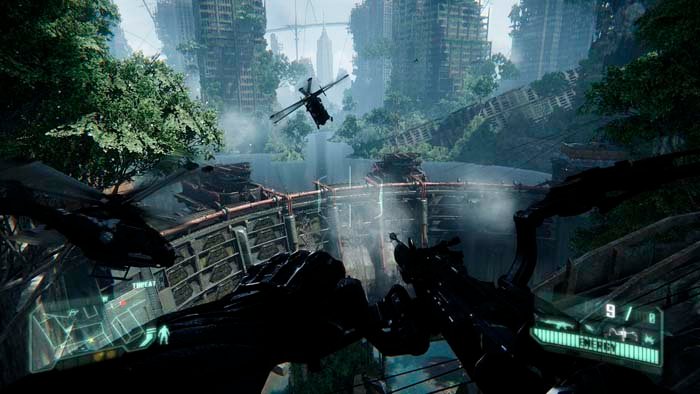
Few games tested the PS3 as aggressively as Crysis 3. CryEngine 3 rendered at 1024×720 to stabilize performance, targeting 30fps with dips during intense combat, while leveraging the Cell processor for advanced GPU offloading. This enabled high-quality volumetric god rays, soft shadow mapping on characters, and dense post-processing effects like motion blur and depth-of-field during large-scale firefights.
Volumetric fog dynamically interacted with lighting in the game’s overgrown urban environments, while texture fidelity and shadow resolution surpassed the Xbox 360 version, as noted by Digital Foundry. Despite its performance challenges, Crysis 3 delivered some of the most atmospheric visuals on PS3, pushing the hardware perilously close to next-gen standards through sheer technical ambition.
Beyond: Two Souls

- Release Year: 2013
- Developer: Quantic Dream
- Genre: Interactive Drama / Adventure
Beyond: Two Souls represented Quantic Dream’s most ambitious technical undertaking on PS3, prioritizing character realism above all else. The proprietary engine captured full facial and body performances, delivering highly expressive characters with convincing subsurface skin scattering, dynamic hair and cloth simulation, and detailed eye rendering—even under rain and low-light conditions.
To accommodate this level of fidelity, the game ran at sub-720p resolution, with frame rates occasionally dipping below 25fps during action-heavy sequences. Physically inspired lighting brought realism to fire, wet surfaces, and interior spaces, while a cinematic 2.35:1 letterboxed aspect ratio subtly reduced rendering load. Despite performance compromises, Beyond: Two Souls achieved a near-next-gen look on PS3, standing as a bold example of visual ambition outweighing technical restraint.
Timeless Visuals: Why These PS3 Games Still Hold Up
Looking back, the PS3’s greatest visual achievements weren’t just about horsepower—they were about optimization, creativity, and technical ingenuity. Developers learned to work within tight memory limits, exploit parallel processing, and prioritize visual impact where it mattered most. The result is a catalog of games that, even today, can surprise players with how well they’ve aged.
Whether you’re revisiting these titles on original hardware or exploring them through modern re-releases and emulation, they remain a testament to what’s possible when developers fully understand their tools. The PS3 era reminds us that pushing graphics forward isn’t only about newer hardware—it’s about smarter design.
Fire up your console, revisit these classics, and take another look at a generation that redefined what console visuals could be.